



A pharmaceutical industry with an investment of one billion is being established in Budhiganga, Morang

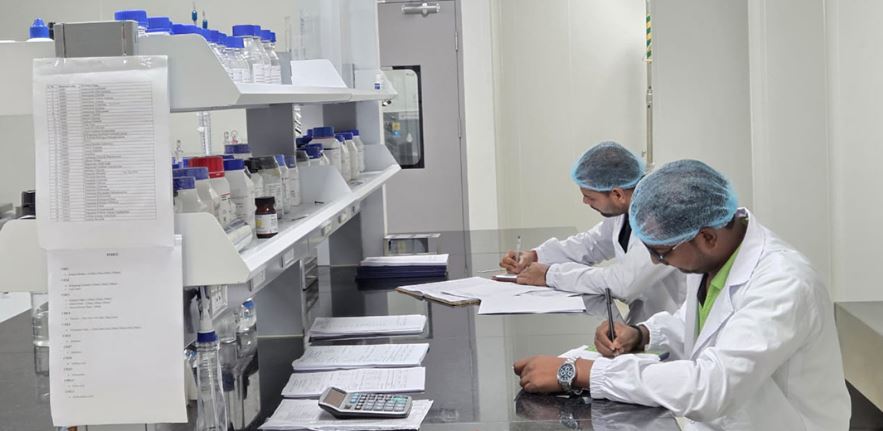
Nepal Health News, Biratnagar – A pharmaceutical industry with an estimated investment of one billion rupees is being established in Budhiganga Rural Municipality–2 of Morang district. Alexa Life Sciences Pvt. Ltd. is setting up the plant with the goal of producing high-quality medicines that meet international standards.
According to the company’s chairman, Dinesh Kumar Swarnkar, around NPR 750 million has already been spent on the construction of the plant. An additional NPR 250 million will be invested to complete the construction fully. In its initial phase, the industry will produce saline, and in the second phase, it will manufacture SVP (Small Volume Parenteral) glass injections of various sizes. In the final phase, it will start producing eye and ear drops.
Currently, among around 11 pharmaceutical companies operating in Nepal, only one domestic company is functioning at full capacity. In this context, once Alexa Life Sciences becomes operational, it is expected to become one of the country’s largest and most advanced pharmaceutical industries, said Swarnkar.
Although Nepal’s pharmaceutical market has an annual turnover of around NPR 60 billion, about 65 percent of it is dominated by foreign companies. According to Swarnkar, the main reasons behind this are weaknesses in pharmaceutical policy and a lack of sufficient support for domestic industries. While over 100 companies are registered with the Department of Drug Administration, only about 75 are actively operating.
Alexa’s director Ranjit Bhagat noted that most industries produce the same types of medicines, leading to intense competition and limited market share. As a result, only 20 to 25 companies are operating steadily, while others are struggling.
Swarnkar also highlighted several challenges in operating the industry, such as inconsistent electricity supply, high customs duties on raw materials, the burden of value-added tax, and delays in health insurance payments, all of which can negatively affect operations.
He further stated that although similar types of medicines are being produced domestically, the open import of foreign medicines has made it difficult to expand the market for local products. Additionally, the retail prices of some medicines have remained unchanged for the past 10 to 15 years, creating an imbalance between production costs and revenue.