



The Five-Point Declaration Issued After the National Midwifery Conference: Here are the Key Decisions

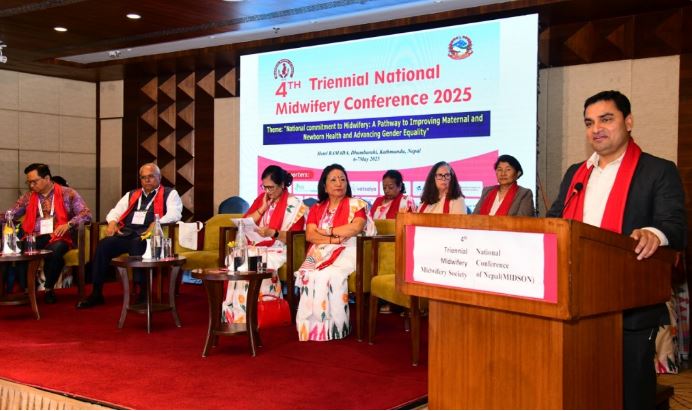
Nepal Health News, Kathmandu – The Fourth Triennial National Midwifery Conference, held recently in the capital Kathmandu, concluded with the aim of strengthening midwifery services and education to improve safe motherhood and newborn health. The conference, held under the main theme “A Pathway to Improve Maternal and Newborn Health and Promote Gender Equality,” issued a five-point declaration.
The declaration, released at the conclusion of the conference by the Nepal Midwifery Society, expressed a commitment to achieving the Sustainable Development Goals (SDGs) by 2030 and reducing maternal and newborn mortality rates in line with the 16th plan.
The five key points of the declaration are:
-
Expansion of Investment in Midwifery Education and Services:
The declaration urged the government to increase financial investment in midwifery education under gender-responsive budgeting, as it has a positive impact on health, economic prosperity, and gender equality. It is believed that this investment will help achieve the desired goals. -
Midwifery Workforce Management:
The conference emphasized the need to formally integrate the midwifery profession into the national health system by creating positions, ensuring appointments, job stability, and professional development. -
Promotion of Respectful Maternity Services:
The conference stressed the importance of maintaining dignity and quality in maternity services, considering women's human rights and cultural sensitivities in the process. -
Regulation of Midwifery Practice:
It was concluded that developing laws and regulatory systems for midwifery is essential to ensure safe and quality services. -
Promotion of Professional Coordination and Collaboration:
The conference highlighted the need for increased coordination and shared decision-making processes among all professional sectors related to sexual and reproductive health to improve operational efficiency.
Discussions, based on the Safe Motherhood and Reproductive Health Rights Act 2075 and international recommendations, emphasized the need for collaboration and commitment from the government, civil society, development partners, healthcare providers, and the private sector.