



Challenges in the health budget, maternal and child services affected, support needed – Minister Paudel

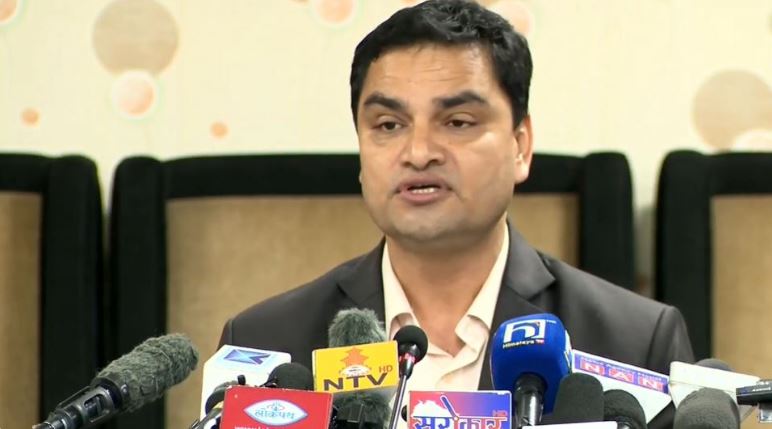
Nepal Health News, Kathmandu – Nepal’s Minister for Health and Population, Pradeep Paudel, has stated that the declining trend in foreign development assistance has adversely affected the country’s maternal, child, and newborn health programs. Emphasizing the need for continued international support in such a situation, he urged the United Nations and other donor agencies to provide sustained assistance.
Minister Paudel made these remarks during a ministerial-level discussion held ahead of the 78th World Health Assembly (WHA) organized by the World Health Organization (WHO) in Geneva, Switzerland. He highlighted that cuts in aid have created challenges in primary healthcare services, particularly affecting access for women and young children.
According to him, around five million women of reproductive age in Nepal are experiencing disruptions in health services, and budget shortages are impacting nutrition programs targeting 1.5 million children under the age of five. Similarly, reproductive health education programs for 3.5 million adult citizens have also been affected by the funding cuts.
Minister Paudel stated that although Nepal has been making efforts to increase investment in the health sector through internal resources, the budget shortfall has posed a significant challenge. He stressed that such support is crucial, especially for developing and least-developed countries like Nepal, and appealed for continued financial and technical assistance in a sustainable manner.
In the assembly, Minister Paudel also highlighted Nepal’s achievements in improving maternal and child health. He noted that in 2023, Nepal had made significant progress in reducing maternal mortality—achieving a 71% decrease compared to the year 2000. He expressed confidence that if this progress continues, Nepal will be able to meet the Sustainable Development Goals (SDGs) by 2030.