




For the first time in the world, a successful bladder transplant has been performed in a human


Nepal Health News, Kathmandu – A new chapter in the history of medical science has begun in California. Doctors at the Ronald Reagan UCLA Medical Center in Los Angeles have successfully performed the world’s first complete bladder transplant in a human. This is considered a unique milestone in the field of medicine.
First person to receive a bladder transplant
The patient, 41-year-old Oscar Lerencer, underwent this transplant, which has given him a new lease on life. Due to a rare form of cancer, Oscar’s bladder had to be almost entirely removed, and he had also lost kidney function, leading him to rely on dialysis for years.
Normally, a bladder can hold up to 300 milliliters of urine, but in Oscar’s case, that capacity had reduced to just 30 milliliters. His condition was critical, and he lived under constant pressure. However, after this new transplant, he has reportedly regained hope for life.
The surgery and preparation
The surgery was performed on May 4, 2025, led by Dr. Nima Nassiri from UCLA and Dr. Inderbir Gill from the University of Southern California. Before initiating the procedure, the doctors had spent four years in preparation—conducting tests on cadavers and animals.
The process was extremely complex because connecting the bladder to the body required careful attachment of nerves and blood vessels. For this, the doctors developed a new technique, making the transplant more feasible.
The outcome of the successful transplant
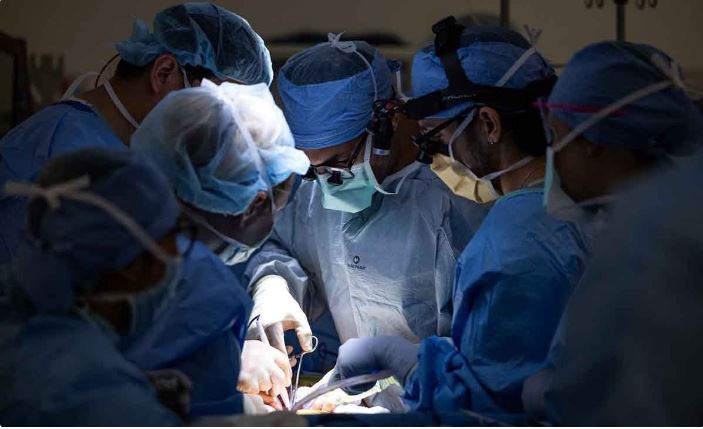
In an 8-hour-long surgery, both the kidney and bladder were transplanted simultaneously. Both organs started functioning immediately after the transplant. Oscar’s body was able to release about 20 pounds of excess fluid.
Initially, doctors were unsure whether Oscar would be able to feel his new bladder filling. However, after the catheter was removed, he was able to urinate right away—an outcome that even surprised the doctors. Regaining this ability after seven years was an emotional moment for Oscar.
Challenges of old methods and new possibilities
Previously, for patients without a bladder, a part of the intestine was used to divert urine, but this came with risks such as infection, bacterial growth, and long-term health issues. Now that a direct bladder transplant is possible, such complications can be avoided.
Looking to the future
This success is part of a research project by UCLA, under which four more patients will undergo similar trials. If those are also successful, bladder transplantation could become a widely adopted medical practice in the future.