



Don’t stress about hair fall – there is a solution." – Dr. Elina Karki


“Thick, shiny hair” – everyone desires it, but what happens when it starts falling out?
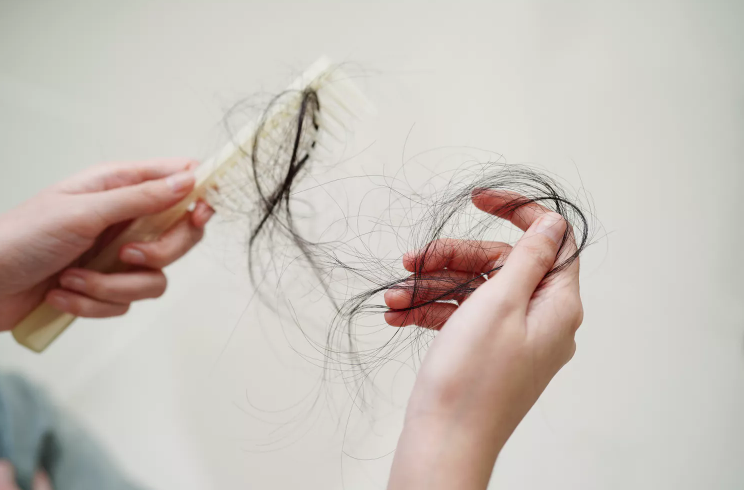
Some notice it on their pillow in the morning, others see hair all over the floor after a shower, or more hair than usual stuck to their comb. Then the worry begins — “Am I on the path to baldness?”
Hair fall might seem like a common issue, but it can have various underlying causes. Hair loss can be a sign of physical or mental health issues. Losing 50 to 100 strands of hair per day is considered normal. But if it exceeds that, it’s time to seek a solution.
Why does hair fall out?
-
Genetics: Male-pattern baldness is common in men, while in women, the front part of the scalp may start thinning.
-
Hormonal imbalance: Conditions like PCOS, thyroid disorders, and post-pregnancy hormone changes can lead to hair loss.
-
Nutritional deficiencies: Lack of vitamins A, B, C, D, iron, and zinc.
-
Stress: Prolonged stress for three months can disrupt the hair growth cycle. High stress increases cortisol (stress hormone), which hampers the hair cycle.
-
Lifestyle factors: Irregular sleeping habits, junk food, smoking.
-
Dandruff: An unclean scalp can cause dandruff, which in turn causes hair loss.
Ever heard of the “hair cycle”?
Hair goes through three phases – growing, resting, and shedding. Problems arise when this cycle is disrupted. In hereditary cases, the growing phase shortens, and hair becomes thinner over time.
First, identify the cause – only then begin treatment
-
Get a blood test (to check thyroid and vitamin levels).
-
Observe when the hair fall began and how it has progressed.
-
Could it be a side effect of any medication?
-
Does anyone in your family have the same issue?
PRP Therapy – Reviving hair using your own blood!
In Platelet-Rich Plasma (PRP) therapy, platelets extracted from your own blood are injected into your scalp. It is a very safe and effective procedure with no side effects.
Other methods like GFC, microneedling, and derma roller are also available but should only be used under medical supervision.
Can oil regrow hair?
Oil creates a nourishing environment that strengthens hair but does not directly regrow it.
-
Oily scalp: Avoid excessive oil use.
-
Dry scalp: Occasional oiling is okay.
-
Use sulfate-free shampoos.
Diet and Lifestyle – The real tonic for hair!
-
Include protein, leafy greens, eggs, fish, and zinc-rich foods in your diet.
-
Engage in daily exercise, yoga, and meditation.
-
Get adequate sleep.
-
Avoid smoking and alcohol.
How long does it take for hair to grow back?
Hair grows only about 1 cm per month, so patience is key.
Results may take 6 months to 1.5 years. Persistence and consistency are crucial.
If the cause is alopecia areata, improvement is possible with injections and ointments. However, if the hair roots are destroyed due to injury or burns, regrowth is not possible.
In cases of genetic hair loss, hair thinning continues, and hair transplant may be necessary.
Conclusion
Hair loss is not the end of the world. With proper diagnosis, the right treatment, and patience, your hair can shine again!
If you’re troubled by hair fall, now is the time to understand yourself better and move towards a healthy and beautiful hair journey.