



Laparoscopic Surgery: An Advanced Modern Technique — What Conditions Is It Effective For?

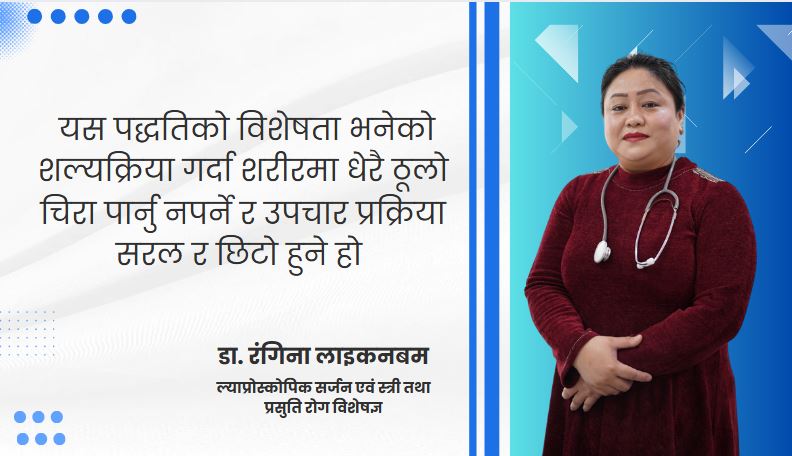
Many people in Nepal are still unfamiliar with the role of endoscopic gynecologists. Today, in this health talk, we aim to understand who these doctors are and how they treat patients. An endoscopic gynecologist is a medical specialist who uses advanced minimally invasive techniques, especially laparoscopic (keyhole) surgery, to treat gynecological issues. The primary advantage of this technique is that it does not require large incisions, making the surgery simpler and recovery faster.
Who is laparoscopic surgery for?
Women experiencing uterine or other abdominal issues who are advised to undergo open surgery can often benefit from laparoscopic surgery instead. It is a highly effective alternative that involves less trauma and faster recovery.
What is laparoscopic surgery used for?
Apart from normal deliveries and open surgeries, almost all other treatments can be done laparoscopically. It is commonly used to treat a wide range of abdominal problems such as chronic abdominal pain, hernia, appendicitis, gallbladder issues, uterine and ovarian problems, kidney diseases, and prostate conditions.
Is laparoscopic surgery painful?
Generally, laparoscopic surgery is not painful. It involves making small incisions through which specialized instruments are inserted. As a result, patients experience less pain compared to traditional open surgeries. In fact, patients are often discharged the same day after surgery, which makes it a very practical option.
Why should women opt for laparoscopic surgery?
Laparoscopic surgery requires only small incisions in the abdomen, reducing pain and bleeding. Even when the uterus is removed, blood loss is typically less than 10ml. This allows women to return to their daily household and professional routines quickly. Moreover, the chances of long-term complications are significantly lower compared to open surgery. Many women who undergo open surgery later experience pain at the incision site during cold weather or rainy seasons, which does not happen with laparoscopy. Therefore, laparoscopic surgery has significantly improved the quality of life for women.
Is laparoscopic surgery a major surgical technique?
Yes, laparoscopic surgery has simplified many complex surgeries. It typically involves just a one-centimeter incision. Recently, mini-laparoscopy techniques, which require incisions as small as half a centimeter, have also become available. This makes it an important tool in major surgical procedures.
How long does laparoscopic surgery take?
The duration varies depending on the case. Generally, it takes between 30 to 60 minutes. If basic tools and technologies are used, a surgery that might otherwise take one hour could extend to three hours. However, with advanced tools and experienced surgeons, even complex surgeries can be completed more quickly. The time also depends on the surgeon’s expertise, training, and experience.
What are the benefits of laparoscopic surgery?
Laparoscopic surgery minimizes trauma to the abdominal wall, resulting in less pain, less bleeding, and fewer scars. Recovery is much faster, and patients usually don’t need to stay long in the hospital. Hemoglobin levels remain stable due to minimal blood loss, and most women can resume normal activities within a week to ten days.
Can patients walk after laparoscopic surgery?
Yes, patients can begin walking and resuming normal activities gradually after the surgery. However, a recovery period of seven to nine days is recommended. In fact, we introduced ‘Daycare Hysterectomy’ in Nepal about eight years ago, where patients could arrive early in the morning, have surgery, and walk home the same evening.
Can laparoscopic surgery be done during menstruation?
Ideally, laparoscopic surgery should be performed outside of the menstrual period. However, in emergency cases, it can be performed during menstruation as well.
Which organs can be affected by laparoscopic surgery?
Laparoscopic surgery may affect organs such as the uterus, ovaries, gallbladder, appendix, prostate, and kidneys. In cases where open surgeries were performed earlier, organs like intestines and fat might be stuck together, increasing the risk of injury during laparoscopic procedures. Hence, extra care is needed to avoid damage to the intestines, urinary bladder, or ureters.
Can women conceive after laparoscopic surgery?
Yes, women can become pregnant after laparoscopic surgery. In fact, it can enhance fertility and is beneficial for couples struggling with infertility. There is still a misconception in Nepal that uterine tumors should not be removed, but we have documented cases where women successfully conceived after undergoing such surgeries.
How do patients bathe after laparoscopic surgery?
A waterproof tape called "Tegaderm" is applied to the surgical wound, allowing patients to bathe even the next day after surgery.
How long does it take to fully recover?
Recovery time depends on the type of surgery and the patient's condition. Generally, most patients can resume normal activities within a week to ten days. However, in cases involving large tumors, the recovery might take longer.
What surgeries may take up to eight hours?
In one case, I removed over 100 tumors from the uterus of an 18-year-old girl, which took me eight hours. Larger or more complex surgeries, especially those involving previous open surgeries, can take significantly longer.
Are there side effects after laparoscopic surgery?
Some side effects may occur but are generally mild and temporary. These may include abdominal pain, cramps, fatigue, dizziness, sore throat, sleep disturbances, or shoulder and back pain.
How many incisions are made in laparoscopic surgery?
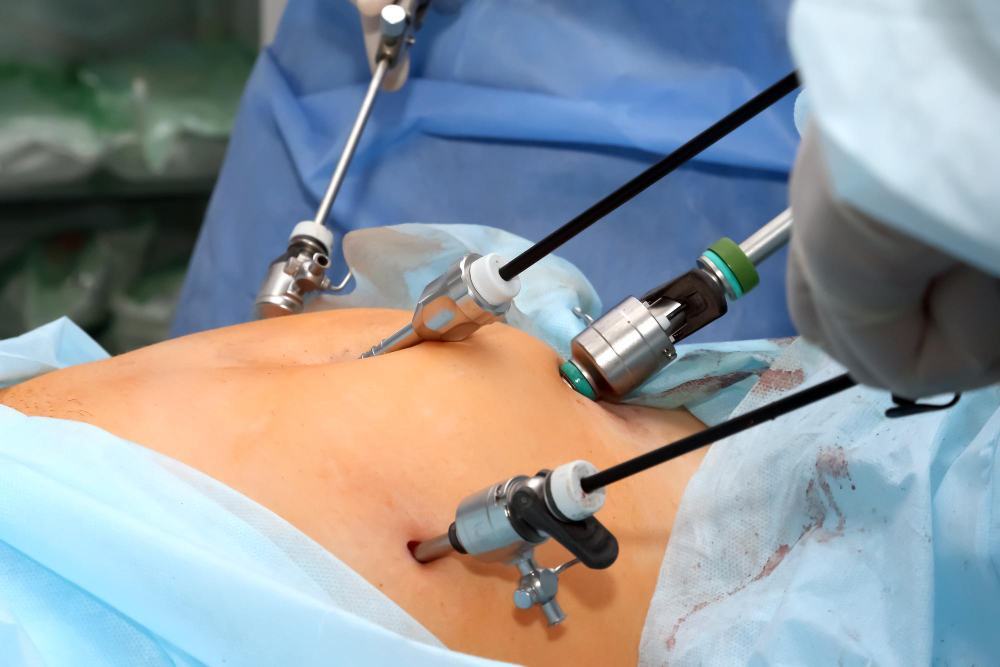
Depending on the complexity, one to four small incisions are made, usually near the navel, to insert the surgical instruments and camera.
Is laparoscopic surgery risky?
Surgical procedures for cancer or deep pelvic conditions require operating in sensitive areas, making them relatively more complex and risk-prone, although laparoscopic techniques are generally safe.
What is another name for laparoscopic surgery?
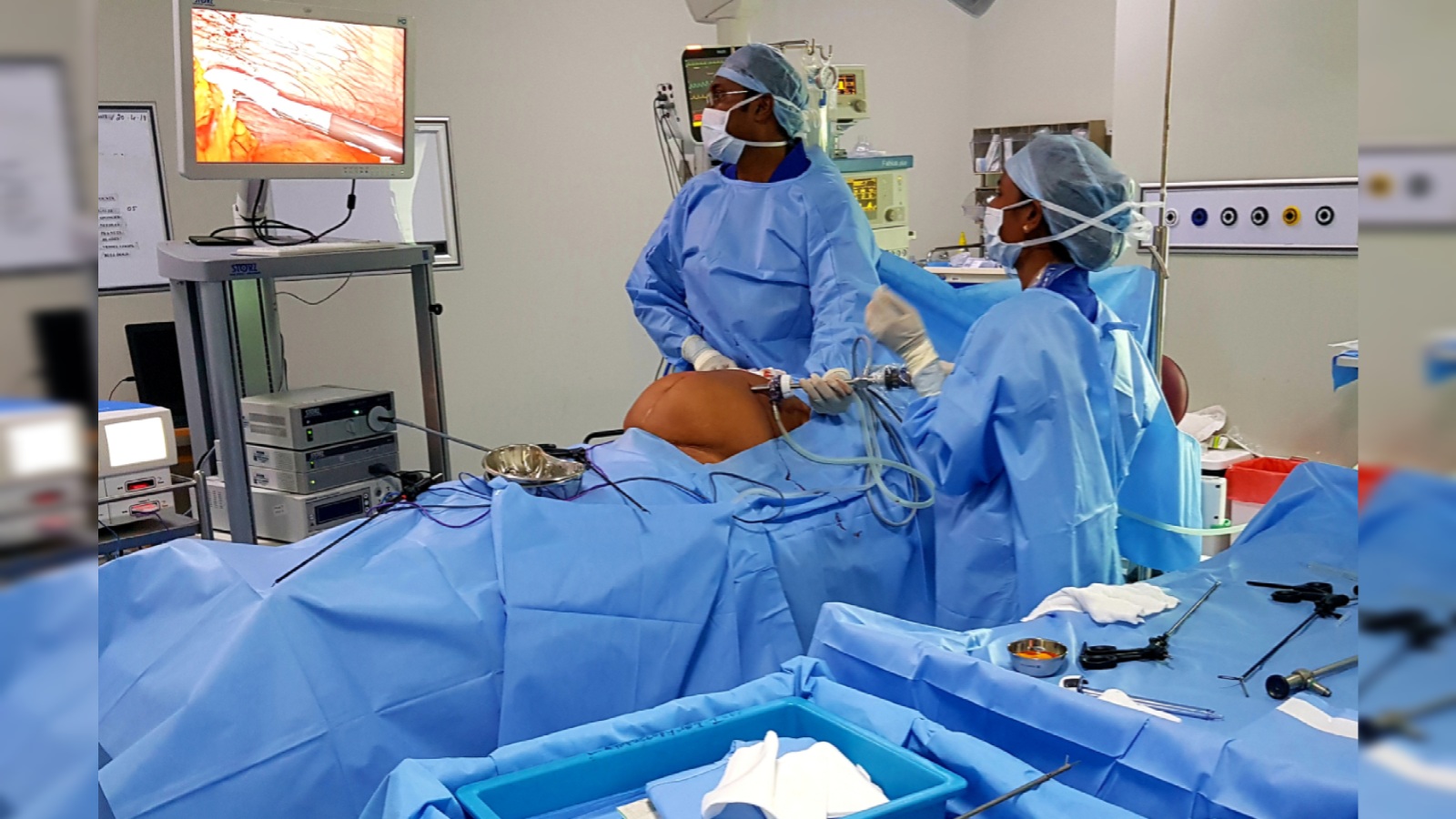
It is also known as "Minimally Invasive Surgery" or MIS.
Can the uterus be removed using laparoscopic surgery?
Yes, it can. This procedure is known as a hysterectomy. Many gynecological conditions can be treated this way. In fact, the global record for laparoscopically removing a uterine tumor is over 6 kilograms. We have also removed tumors weighing up to 3 kilograms using this technique.
What tests are required before laparoscopic surgery?
Patients are required to undergo a chest X-ray, ECG, blood tests, kidney function tests, hemoglobin level, blood sugar, and thyroid level tests. Unfortunately, 75% of surgeries in Nepal are still done through open methods. Patients are often unaware of advanced surgical options. In contrast, patients abroad typically arrive well-informed about their condition and treatment choices. It’s important for patients to actively seek information and ask questions.
Is laparoscopic surgery 100% successful?
In most cases, yes. It is generally safer and offers quicker recovery compared to traditional surgery.
When can a patient eat after laparoscopic surgery?
Patients are kept on an empty stomach for around eight hours before surgery. After the surgery, they are usually allowed to eat after 8–10 hours, depending on their condition. If extensive intestinal work is involved, it might take 24 to 72 hours before resuming food intake.
Can laparoscopic surgery improve fertility?
Yes, it can. Laparoscopic surgery can correct conditions like blocked fallopian tubes, which are a major cause of infertility. Rather than immediately resorting to IVF, laparoscopic procedures can be used to open blocked tubes, thereby enhancing fertility.
How many stitches are involved in laparoscopic surgery?
The small incisions are usually closed using fine stitches, surgical tape, or medical glue. Nowadays, staplers have largely been replaced by medical glue, which dissolves on its own, eliminating the need to remove stitches.
(Dr. Laikhanbam is currently serving at Norvic and Blue Cross Hospitals.)