



We have initiated the process to add 12,000 health personnel over the next five years," said Health Minister Paudel

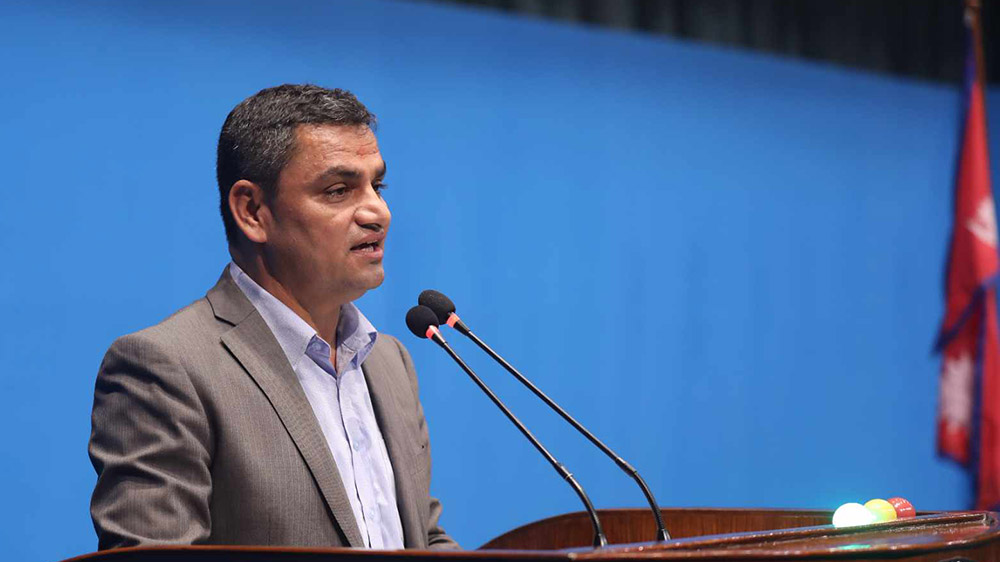
Nepal Health News, Kathmandu – Minister of Health and Population, Pradeep Paudel, has announced that, after a long time, the process of adding 12,000 skilled personnel to the health sector over the next five years—at the rate of 2,500 each year—has officially begun.
Despite the shortage of healthcare professionals, he said that an organizational and management survey of the health sector has been completed and is in the final stages of being submitted to the Council of Ministers for approval.
Responding to questions raised during the parliamentary discussion on the ministry’s budget, Minister Paudel stated that a budget of NPR 95.81 billion has been allocated for the upcoming fiscal year.
Specialized Services in All Provinces
Through the new budget, arrangements have been made for specialized services such as intensive burn care, heart and kidney transplants, and cancer treatments to be provided from one federal hospital or health science institute in each of the seven provinces. Minister Paudel emphasized that he began expanding specialized services to the provinces immediately after taking office, and that the new fiscal year's budget has been allocated for this purpose.
Disease Prevention Programs
The Minister stated that under the new budget, programs titled “My Health, My Community's Health” will be effectively implemented across 736 local units by deploying one public health officer per unit. Additionally, the "Citizen Wellness Program" will be expanded to all local levels using Ayurveda, yoga, meditation, and traditional medicine approaches, along with the implementation of preventive mental health promotion programs.
He also said that services related to cervical and breast cancer, as well as reproductive health issues, will be made available in all local units. HPV vaccinations will be provided to girls under 14 to prevent cervical cancer.
Budget for Basic Hospitals
Minister Paudel shared that completed basic hospitals will be brought into operation from the start of Shrawan (mid-July), with federal government support for doctors and medical equipment in coordination with all three levels of government. For hospitals still under construction or not yet started, strategic location mapping is currently underway to guide their completion and initiation.
Reforms in Health Insurance Board
The organizational and management survey of the Health Insurance Board is in its final stage. Minister Paudel stated that technological upgrades and the integration of all social health security programs will be carried out under a unified insurance system. Outstanding payments to service providers and reimbursement claims will be resolved promptly. He added that comprehensive legal provisions related to insurance will also be implemented to make the system more effective.
Kidney Treatment Center in Madhesh, Neuro Center in Kathmandu
Addressing Parliament, Minister Paudel announced plans to establish a kidney treatment center with special facilities in the Madhesh Province and a well-equipped national neuro treatment center in Kathmandu. Budget has also been allocated for the operation of the completed Chest Disease Hospital in Bhaktapur and the National Ayurveda Panchakarma and Yoga Center in Budhanilkantha.
Budget for Federal Hospital Infrastructure
Minister Paudel revealed that budget has been allocated for infrastructure development at major federal hospitals including: Koshi Hospital, Ramraja Prasad Singh Health Science Institute, Narayani Hospital, Rapti Health Science Institute, Bheri Hospital, Patan Mental Hospital, Patan Health Science Institute, Sukraraj Tropical and Infectious Disease Hospital in Teku, and an integrated Ayurvedic, yoga, and natural medicine hospital in Pokhara and Nardevi Ayurvedic Hospital.
Furthermore, he noted that the BP Koirala Memorial Cancer Hospital has been included in a multi-year plan to start PET scan services and produce cyclotrons essential for cancer treatment. He also emphasized that essential medical tools and human resource development will be prioritized in the new fiscal year.
Construction work on trauma centers and infectious disease hospitals in various parts of the country will be completed. Capacity expansion is planned for Bir Hospital, Trauma Center, Kanti Children’s Hospital, and Maternity Hospital.
Additional Support for Eight Critical Diseases
The Minister informed Parliament that additional facilities will be provided for the treatment of eight critical illnesses. He specifically mentioned that Tharu community members suffering from sickle cell anemia, a hereditary condition, will receive free medication and subsidized treatment.
Health Protection for Migrant Workers
Minister Paudel said that steps have been taken to hold employers accountable for the health protection of Nepali migrant workers. He added that Nepal is preparing to propose a new principle to the World Health Organization to ensure global recognition of employer responsibility and include such provisions in bilateral labor agreements.