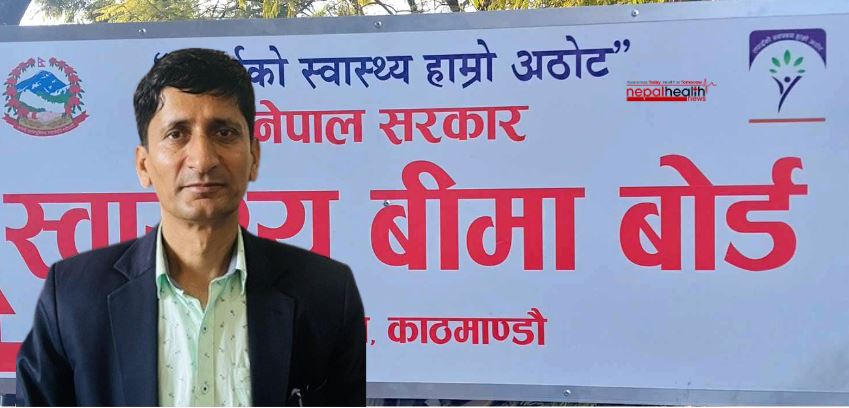




Dr. KC gives the government a one-week ultimatum to reverse the decision on increasing seat numbers
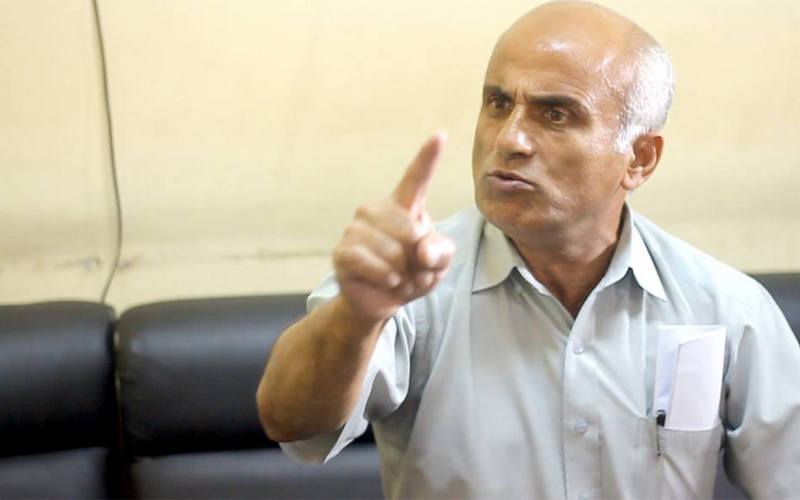
Nepal Health News, Kathmandu – Medical education activist Prof. Dr. Govinda KC has expressed strong objection to the government's decision to increase the number of seats for MBBS and BDS studies. He has warned that such a decision will negatively impact the quality of health education and services.
In the recently held 21st meeting of the Medical Education Commission, a decision was made to increase the number of MBBS seats from 100 to 130, and BDS seats from 50 to 60. Expressing dissatisfaction with this decision, Dr. KC has demanded that the government immediately revise it.
He has given the government a seven-day deadline to address his demand, warning that if the demand is not fulfilled within the stipulated time, he may be compelled to launch a protest.
According to him, recent decisions by the Commission, the government, and the judiciary have raised serious questions about the core spirit and very existence of the Medical Education Act. He also accused former Prime Ministers KP Sharma Oli, Sher Bahadur Deuba, and Pushpa Kamal Dahal (Prachanda) of siding with mafias.
Press Statement
Increasing the number of student seats might make money for politicians and mafias, but it lowers the quality of education. In a sensitive field like medical education, this drop in quality directly affects public healthcare, which means putting the health of regular Nepali people at risk.
Former Prime Minister KP Sharma Oli, who himself migrated from the eastern hill districts to the plains due to hardship and suffering, has no hesitation in using state funds to build a view tower in his electoral district in Jhapa with billions in government investment. However, despite repeated requests from the people and our continued efforts, establishing a large hospital with a government medical college in those same hill districts has never been his priority.
Likewise, in the Far West, where citizens are still compelled to travel to India, Nepalgunj, or Kathmandu for treatment, the government medical college and hospital in Kailali – constructed under pressure from our campaign – remains non-operational even five years after completion. Not only has academic programming not started, but even the hospital services have been halted under various excuses. The region’s leader and former Prime Minister, current power-sharing partner Sher Bahadur Deuba, who had previously attempted to block government funding in favor of opening private medical colleges, clearly does not consider this a priority.
Pushpa Kamal Dahal (Prachanda), who has become adept at clinging to power through any means – legitimate or not – rather than working for public welfare, has repeatedly abused his position to help mafias, just as KP Oli did. Many of the so-called socialist and communist leaders or their party members own or are affiliated with private medical colleges and institutions.
Nepal remains one of the countries with the lowest investment in education and health. Government hospitals and health institutions are still operating with human resource quotas set over four decades ago. Healthcare costs are so high that hundreds of thousands of Nepalis fall below the poverty line every year due to medical expenses. Despite a severe shortage of healthcare services in rural areas, tens of thousands of doctors, nurses, and health workers remain unemployed in urban centers. Instead of addressing these issues, the coalition government of Oli and Deuba seems intent on supporting private medical colleges at any cost.
While both Prachanda and Deuba had attempted this in the past, the recent meeting of the Medical Education Commission, chaired by PM Oli, made a reckless decision to significantly increase the seat numbers in private medical and dental colleges – ignoring our repeated appeals and warnings about its direct negative impact on medical education and public healthcare. We strongly condemn and oppose this profit-driven decision in a sector as sensitive as healthcare, which must be service-oriented and non-profit.
If Nepal’s oldest and most reputed medical institution – the Institute of Medicine (IOM) under Tribhuvan University – is reluctant to admit more than 100 MBBS students due to concerns over quality, then allowing private colleges with less than one-third of the infrastructure and about ten percent of patient flow to admit 130 students is extremely unfortunate. If the government and the Commission are now preparing to increase tuition fees as well, it's worth noting that residential doctors in private medical colleges are already suffering from extreme labor exploitation.
The same leaders responsible for ensuring the quality and equitable access to medical education and healthcare prefer to go abroad for their own treatment, likely because they know how unreliable Nepal’s healthcare system has become. Yet, for their own vested interests, they continue to make decisions that will have long-term negative consequences on the quality of care for ordinary citizens. The inefficiency and helplessness of the Vice-Chairman of the Medical Education Commission has further enabled the profit-driven agendas of these corrupt leaders and mafias. His failure to protect the Commission’s authority is an act of extreme irresponsibility.
We have been fighting for nearly two decades to improve the quality of medical education and healthcare and to ensure accessible, free, and affordable services for all Nepalis – from poor students to common citizens in remote corners of the country. Through collective efforts, the Medical Education Act was passed, the Commission was formed, and despite various unwanted interferences, the Commission had made commendable progress, leading to gradual improvements in education and health services that benefitted students and the public. However, recent irresponsible decisions – including the increase in seat numbers – and flawed rulings by the Commission, the government, and even the judiciary, have jeopardized the very existence of the Medical Education Act.
We have repeatedly urged the government and the Commission to immediately revoke the irresponsible decision to increase seats, scrap any plans to hike tuition fees, ensure residential doctors receive allowances equivalent to those provided by the government, and fulfill our previous demands and agreements. But none of our appeals have been heard. These leaders, who treat politics not as a service but as a profession to exploit the country and its people, cannot understand that a conscious citizen can serve the nation with pure intention and selflessness. They see everyone through their own lens. Instead of addressing our demands, they have once again resorted to old, baseless, unethical, and cunning tactics to defame us with false accusations – like thieves blaming the constable.
Since state power lies with Oli and Deuba, if they have even a shred of morality left, I once again call upon them to investigate any accusations against me, with my full cooperation and participation.
Therefore, I give the Oli government and the Medical Education Commission one more week to address our demands. If they fail to respond within this deadline, I will be compelled to launch a protest, including a satyagraha (peaceful civil disobedience), to fight for our cause.
Prof. Dr. Govinda KC